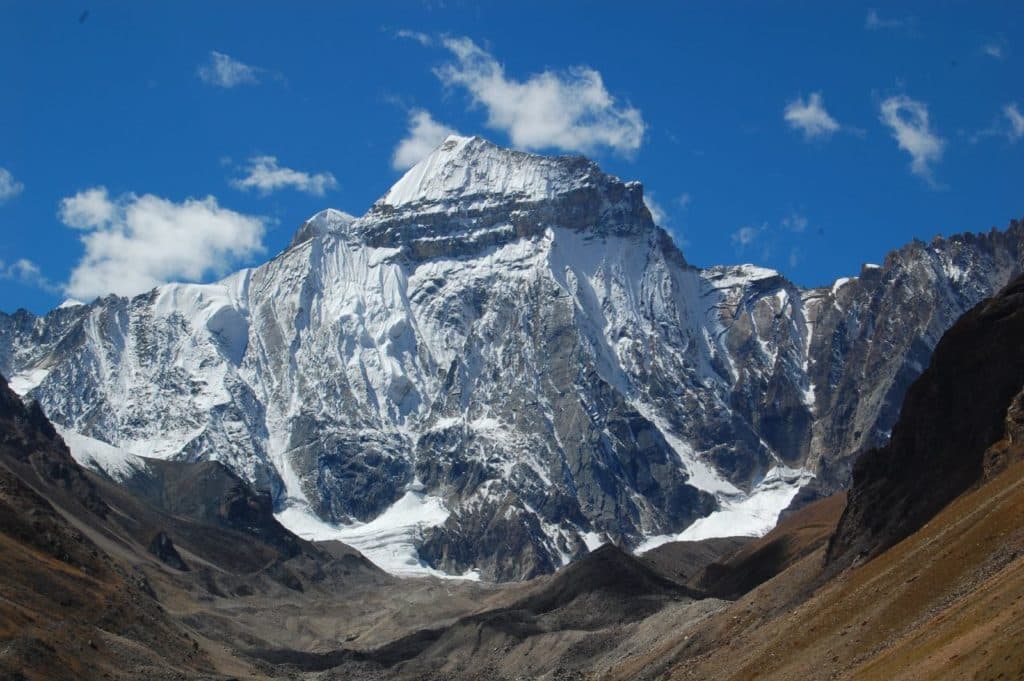
Kailash Mansarovar is the dream. Adi Kailash is the reality for most Indian pilgrims. Here is an honest comparison of both yatras — altitude, cost, availability, and spiritual experience — so you can make the right choice.
For most Hindu pilgrims, Kailash Mansarovar is the supreme Himalayan goal — the abode of Lord Shiva, the axis of the universe, the pilgrimage that is said to wash away the karma of a lifetime. For most Indian pilgrims, it is also maddeningly out of reach. The China permit process has a government lottery. Berths are limited to around 1,000 pilgrims per year through the ITBP route. The cost is upwards of ₹1.8 lakh per person. And the route requires 22 days, a medical fitness certificate, and a level of physical preparation that many first-time pilgrims are not ready for.
Adi Kailash — known as Chhota Kailash — is in the same mountain range, on the same sacred river system, in the same spiritual tradition. It is not a consolation prize. It is a distinct pilgrimage that many who have done both yatras describe as more intimate and more moving than Kailash Mansarovar itself.
The Numbers: Kailash Mansarovar vs Adi Kailash
- Kailash Mansarovar: 22 days · Max altitude 5,642 m (Dolma Pass) · Cost ₹1.8–2.5 lakh per person · Limited to ~1,000 ITBP-route permits per year · Requires Chinese visa + government lottery
- Adi Kailash Yatra: 9 days (from Kathgodam) · Max altitude 4,378 m (Jolingkong) · Cost from ₹49,999 per person · Inner Line Permit only — no foreign visa · Available May–June and September–October
- Both involve the Kali River corridor through Pithoragarh district
- Both require an Inner Line Permit for the restricted border zone
- Both culminate in darshan of a Shiva-associated sacred peak above a glacial lake
Why Kailash Mansarovar Is So Difficult to Access
The Kailash Mansarovar Yatra via the Lipulekh Pass route is administered by the Ministry of External Affairs and the ITBP (Indo-Tibetan Border Police). Pilgrims apply through the MEA portal and are selected by lottery. In 2023, only around 800 Indian pilgrims completed the yatra via this route. The China permit for the Tibet section adds another layer of government approval. The Nepalese route via Simikot is an alternative for those who cannot access the India–Tibet crossing, but costs are higher and logistics more complex.
The Lipulekh route passes directly through the same Kalapani corridor as the Adi Kailash Yatra. When the Adi Kailash yatri drives from Gunji towards Om Parvat, they are on the same road that Kailash Mansarovar pilgrims take towards the Lipulekh Pass. The terrain, the altitude, the villages — they share the same sacred geography.
The Spiritual Case for Adi Kailash
Adi Kailash at 6,310 m replicates the physical form of Mount Kailash with extraordinary fidelity — four faces, a pyramidal summit, a glacial lake (Parvati Sarovar) at its base. The Skanda Purana mentions Adi Kailash as one of the five Kailash peaks in the Himalaya. In Shaiva tradition, a darshan of Adi Kailash carries the same spiritual weight as Kailash Mansarovar for those who cannot make the Tibet crossing. The valley at Jolingkong (Jyolingkong) is sealed from mass tourism by the Inner Line Permit requirement — there are no crowds, no hawkers, no hotels. Just the peak, the lake, and the sound of glacier melt.
Who Should Choose Adi Kailash
- First-time pilgrims who want Himalayan yatra experience before attempting Kailash Mansarovar
- Devotees who want the Kailash Mansarovar experience without a 22-day commitment or ₹2 lakh budget
- Anyone who did not receive a Kailash Mansarovar lottery berth this year
- Pilgrims who want to add Om Parvat darshan (the natural OM symbol) on the same trip
- Trekkers who want the Inner Line Permit experience in the Pithoragarh Himalaya
- Families and older pilgrims for whom the 5,642 m altitude of Dolma La is a medical concern
Who Should Wait for Kailash Mansarovar
- Pilgrims for whom the parikrama (circumambulation) of Mount Kailash itself is the spiritual goal — Adi Kailash does not offer a parikrama
- Those who have the physical fitness for 5,642 m altitude (requires regular training to 4,500+ m beforehand)
- Anyone for whom the Tibetan plateau and Mansarovar lake are part of the specific pilgrimage goal
- Pilgrims who have already done Adi Kailash and are ready for the full Kailash Mansarovar experience
My honest advice after leading both types of yatris for fifteen years: do Adi Kailash first. Not as a substitute — as preparation. You will understand the altitude, the terrain, the pace. You will know whether the Kailash Mansarovar parikrama is within your capacity. And you may find, as many pilgrims do, that the Jolingkong valley gives you something that the more-crowded Tibet route cannot — total silence in a sacred place.
Combining Both on One Trip
It is not possible to combine Adi Kailash Yatra and Kailash Mansarovar on a single itinerary — they require separate permits, separate government approvals, and separate preparation windows. However, many pilgrims use Adi Kailash as the training yatra in Year 1, apply for the Kailash Mansarovar lottery in Year 2, and complete both over a two-year pilgrimage plan. The Adi Kailash experience meaningfully prepares you for Kailash Mansarovar — the altitude profile (up to 4,378 m), the Inner Line Permit process, and the Kalapani corridor environment are directly relevant.
Vijay Singh Bisht
Founder & Lead Guide
Vijay Singh Bisht has personally led over 200 yatras to Adi Kailash and Om Parvat. He has met hundreds of pilgrims who came for the Adi Kailash yatra after failing to get a Kailash Mansarovar berth — and watched them leave wondering why they had waited.